The "Forest City" folly
My Lords, I join others in paying tribute to my noble friend Lord Gascoigne for his report. I recognise the need for new homes, and the role that new settlements can play in that provision. The question, of course, is where those new settlements should be located, and on what scale.
I must declare not only the interest which I have placed in the register—that I am chairman and have other positions in the Countryside Alliance—but also that I live near Newmarket, on the edge of a proposed new development on the east Cambridgeshire/west Suffolk border. My views, therefore, may be discounted because I have an obvious interest and concern, but I hope to make a case against this proposed settlement on its merits.
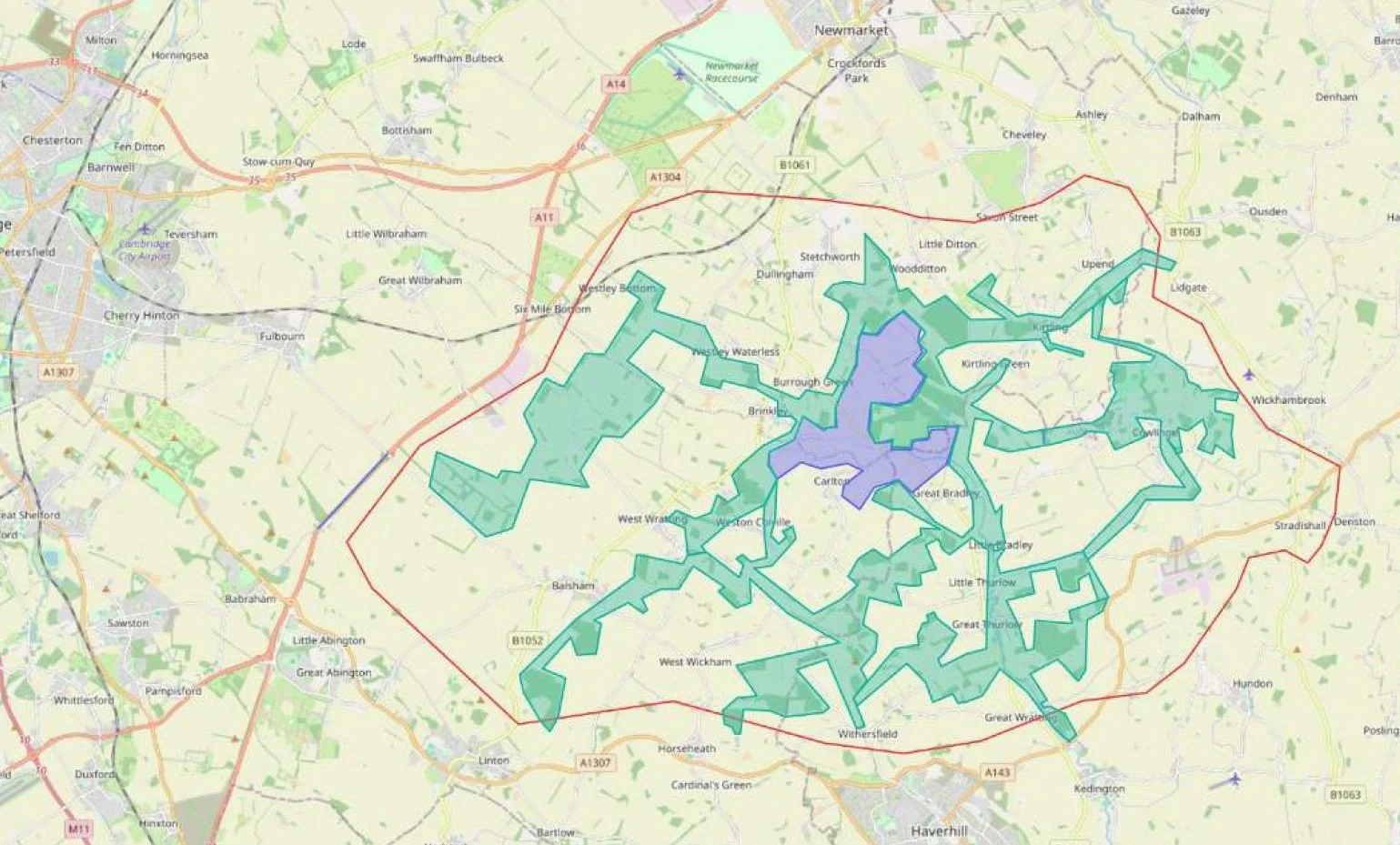
It is called Forest City, an oxymoron reminiscent of Shakespeare’s “Sweet sorrow” or Milton’s “Darkness visible”. It is a privately promoted scheme which first emerged, to general astonishment, last year. It is not a new town; it is a city which would apparently comprise 400,000 homes across 45,000 acres, and that scale is extraordinary. It is twice the size of Bristol with about the size of Birmingham’s population, itself the second largest city in the country. It is a larger city than Manchester and would be one of the most significant urban developments in modern British history. It is more than three times the size of the largest new town, Milton Keynes; five times the size of the second largest, Telford; and—I am sure of interest to the Minister—10 times bigger than Stevenage and 20 times bigger than Welwyn Garden City.
It is located entirely on beautiful countryside in the Stour valley—countryside which I would argue merits protection in its own right—and is in stark contrast to the kind of lower-grade or degraded countryside, or even areas of green belt that are degraded, which we should not be worried about in protecting beautiful countryside. Significantly, this is also grade 2 farmland. The Government’s own Land Use Framework for England says that its analysis
“aims to reduce trade-offs by avoiding land use change on our best agricultural land”.
That reflects the National Planning Policy Framework, which directs development away from the best and most versatile agricultural land, including grade 2 land.
“It is twice the size of Bristol ... about the size of Birmingham (the second largest city in the country) ... a larger city than Manchester ”
This proposal sits alongside—directly proximate to—the development which my noble friend Lord Lansley already described: an increase of 50,000 homes in Cambridge that would double its size. On one side of the A11, in the Oxford-Cambridge corridor—your Lordships can see the logic in this—there would be a massive new development and then on the east side, in entirely open countryside, not on the Oxford-Cambridge corridor, there would be another which would completely dwarf it. The proposal seems confused about whether it is a potentially complementary scheme or one which is an alternative.
This area of the country, Cambridgeshire, is water stressed. It is one of the driest areas of the country. Where would the water come from? The scheme’s promoters say that there would be a cost in providing it of £4.3 billion. Where would the transport infrastructure be funded from? The scheme’s promoters say that roads, railway, et cetera would cost some £16 billion—there is no proper railway connection to this development. The local Member of Parliament, Nick Timothy, estimates the infrastructure costs alone as some £60 billion and the state subsidy required to build this development as between £80 billion and £110 billion, because there is a proposal that the housing would be all affordable and that the plan would eliminate land value receipts, which normally fund roads, schools and hospitals. What that suggests is that this proposal is pie in the sky.
“There will be concrete where there was countryside, highways where there were hedgerows and more housing where there are hamlets.”
There may be an attractive brochure with pictures of beavers and bison, people swimming in lakes, and gobbledygook such as “symbiotic mobility” and “synchromodality”. There may be doublespeak about villages being integrated in the urban fabric of the city, but the truth is that there will be concrete where there was countryside, highways where there were hedgerows and more housing where there are hamlets. This is a utopian delusion. It is not a serious proposal, but the effect on the local community of promoting it is serious, because it creates anxiety and property blight. Of course, it also has an effect on the existing proposed development nearby in Cambridgeshire.
The Government have said that they will consider any reasonable alternatives to the recommended locations of their new towns. I note from the Financial Times on 29 May that the Government said that they had received the proposal that I am referring to and that they were reviewing it. I would encourage the Government to rule out this absurd proposal as soon as possible to eliminate the tremendous uncertainty that is created by it, to recognise that it is a folly and not a serious or sensible proposal, but one that is creating enormous worry to a huge number of local residents.
The Parliamentary Under-Secretary of State, Ministry of Housing, Communities and Local Government (Baroness Taylor of Stevenage) (Lab)
Before I draw my remarks to a close, I will briefly respond to the noble Lord, Lord Herbert, on Forest City. We are aware of the Forest City proposals and will be following how they progress through the appropriate local consultations and approvals, but this is not part of our new towns programme or proposal.
Read the complete debate here.